ISPINIGOLI CAVE
Management Cooperative. Organizes Guided tours in the area.
© Coop. Ghivine del G.r.a.
ISPINIGOLI CAVE
archaeological finds
The archaeological finds discovered inside the Ispinigoli cave are now exposed at the Archaeological Museum of Dorgali.
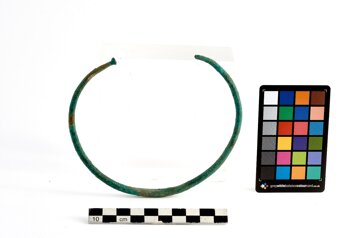
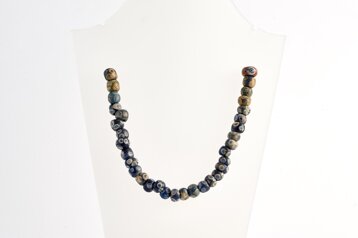
bronze choker necklace
necklace
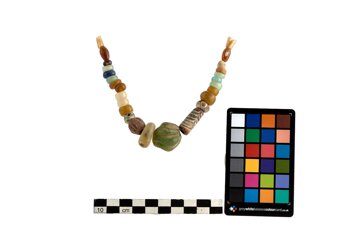
decorated necklace
Roman Age: Bronze necklace with open ends.
Punic Age: 18 glass paste elements.
Punic Age: necklace made of glass paste beads with small circle decoration.
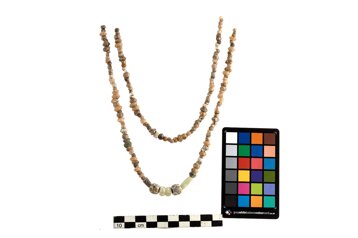
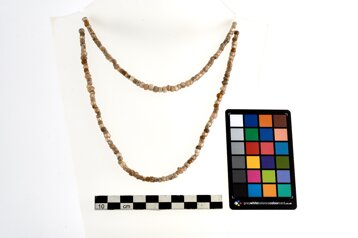
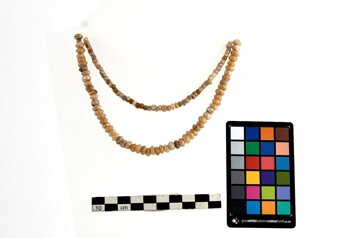
necklace
necklace
necklace
Punic Age: necklace made of glass paste beads.
Punic Age: necklace composed of 193 glass paste beads.
Punic Age: necklace made of 183 glass paste beads.
historical information
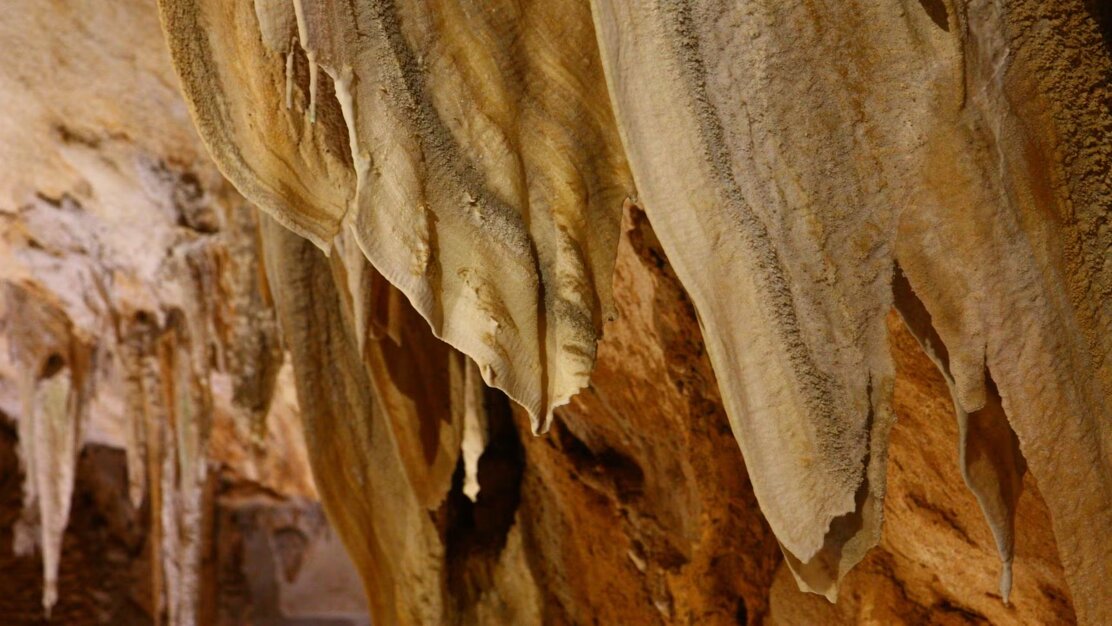
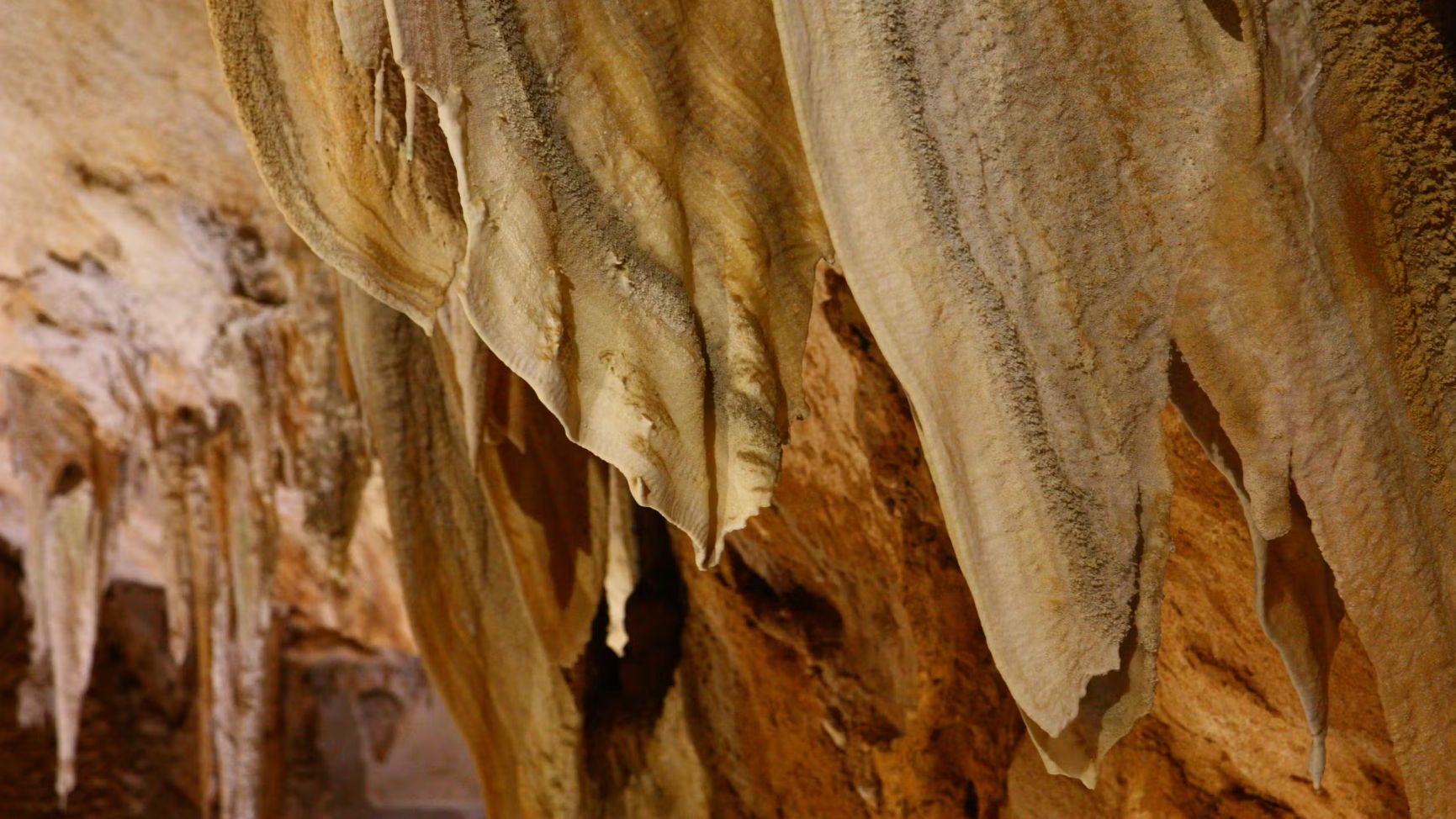
The Ispinigoli Cave was opened to the public in 1974, and since then, more than 40,000 visitors a year descend into the immense cavern where the majestic 38-meter-high limestone column rises—the tallest in Europe and one of the tallest in the world.
The large chamber belongs to the Ispinigoli – San Giovanni su Anzu – sos Jocos karst complex.
This complex consists of three interconnected caves with a total length of 17 km. This karst system runs from southwest to northeast within Mount S’Ospile, with three entrances opening at different altitudes. This creates pressure differences that generate a continuous airflow inside, maintaining a temperature of 16-17 degrees Celsius year-round.
The large galleries of this karst cave are characterized by significant clay deposits, enormous columns, and countless white concretions. At the bottom of this complex flow small underground streams that emerge in the nearby San Giovanni Su Anzu Cave.
The system was systematically explored starting in 1954 by the Nuoro Speleological Group, which identified the connection between the two caves. Research continued in the following years by leading experts in Sardinian speleology: Father Furreddu, Bruno Piredda, and Eraldo Saracco from Piedmont, who tragically lost his life in 1965 after falling into the cave's second shaft. A plaque at the entrance to the speleological branch is dedicated to him.
In 1995, speleologists from Dorgali and Sassari discovered the connection between the Sos Jocos Cave and the San Giovanni di Su Anzu Cave, thus completing the survey of the entire complex. The cave has attracted considerable scientific interest due to the fossil discoveries of an Ice Age otter, as well as important archaeological remains from the Nuragic (17th-6th centuries BC), Punic (6th-3rd centuries BC), and Roman (3rd centuries BC-6th centuries AD) periods, which attest to the long-standing use of the karst cavity as a burial and religious site.
Among the discoveries were glass paste beads attributed to the Punic period (6th–3rd centuries BC) and the Roman and Late Roman periods (2nd century BC–6th century AD). Initially, these discoveries fueled the legend of a site linked to human sacrifices during the Punic era.
Based on these considerations, the abyss was named the Abyss of the Virgins.
Coopérative de gestion. Organise des excursions sur le territoire.
© Coop. Ghivine del G.r.a.